How our EchoNote™ Goes Further
While others transcribe, EchoNote™ intelligently classifies calls into practical, clinic/doctor-ready categories — helping staff act faster, not just read faster.
Our system recognizes key appointment intents, medication refill requests, and even identifies mild / moderate / severe call reasons based on natural phrasing and context.
We recognize that every specialist classifies calls differently. Our EchoNote™ system can be tailored to match your workflow - simply share your preferred categories, and we’ll configure them at no additional cost.

PHIPA / PIPEDA Compliance & Data Residency (Canada)
ClearQueue is designed from the ground up to align with Ontario’s PHIPA and Canada’s PIPEDA privacy frameworks. In this model, your clinic remains the Health Information Custodian: we act as your secure technology agent, processing calls and transcripts on your behalf under your direction.
All data — audio, transcripts, and summaries — is stored and processed exclusively within Canada, including when additional GPU capacity is used. Every action is encrypted, logged, and access-controlled.
We do not copy or reuse your data for AI training, we do not sell data, and we never transfer PHI outside Canada.
In simple terms:
- You stay the custodian of patient information
- ClearQueue acts as your privacy-bound processing agent
- All storage and computation remain inside Canadian data centres
- Every access is logged, auditable, and traceable
- Encryption is always active: in transit and at rest
What this means in practice:
Your staff receive structured, easy-to-read call information directly inside the ClearQueue portal — no new logins to your EMR, no extra systems to manage, and no new privacy risk introduced.
Privacy-first, by design.
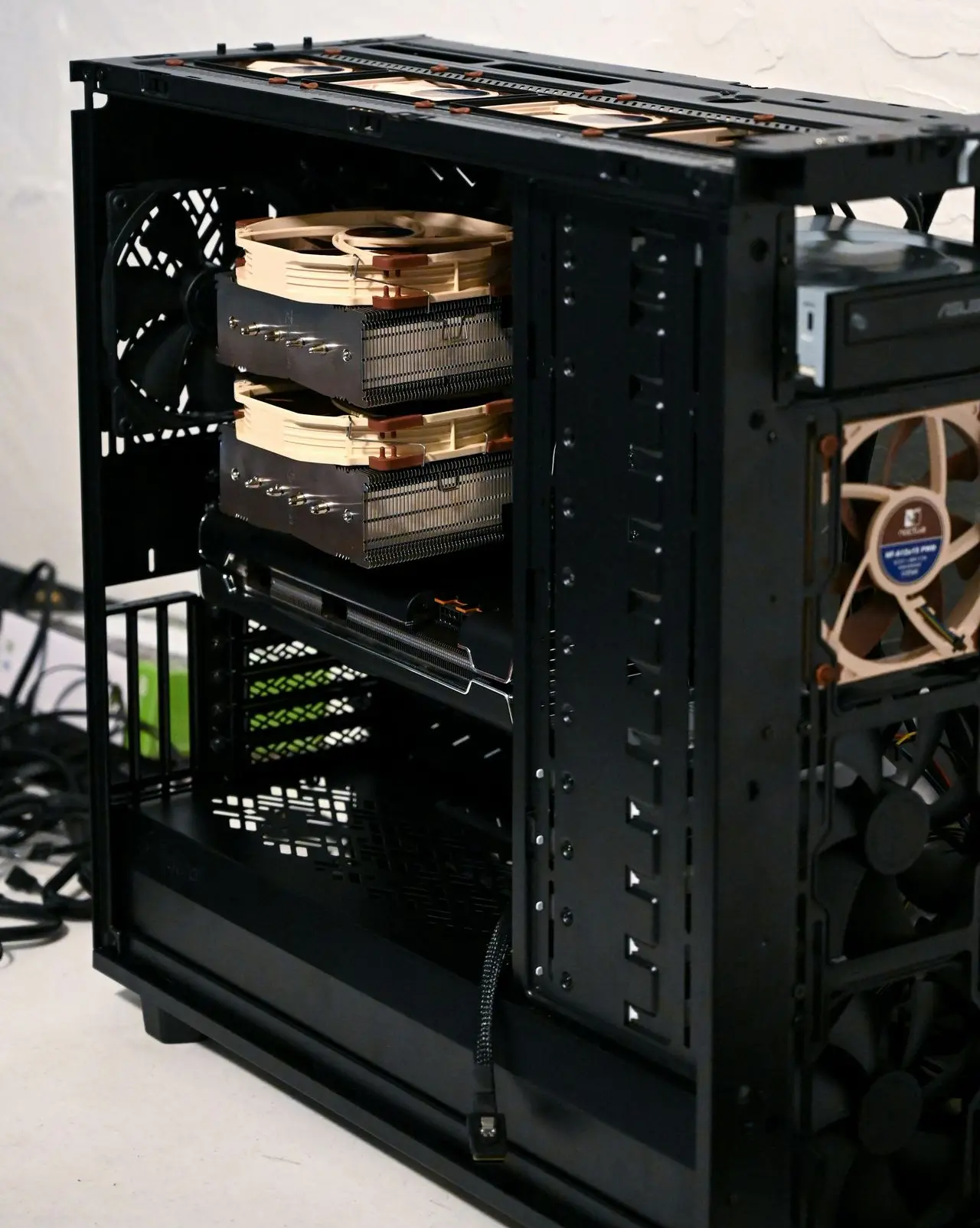
Local GPU Nodes
We utilize GPU nodes managed in North Bay, Ontario to handle the heavy lifting of transcription and summarization. The core processing happens on systems we control directly, not external AI platforms.
When call volume rises, typically on Monday mornings or right after holidays, we scale up automatically by activating additional GPU servers from our Toronto provider. These servers run the same “golden image” as our local nodes, ensuring consistent output quality and performance.
All processing stays within Canada. No U.S. routing. No third-party AI clouds.
In simple terms:
- Primary processing: Our own GPU nodes
- Burst capacity: Extra GPUs from our Canadian data center
- Data stays in Canada: Always
Fast, reliable AI assistance, without ever compromising privacy or control.
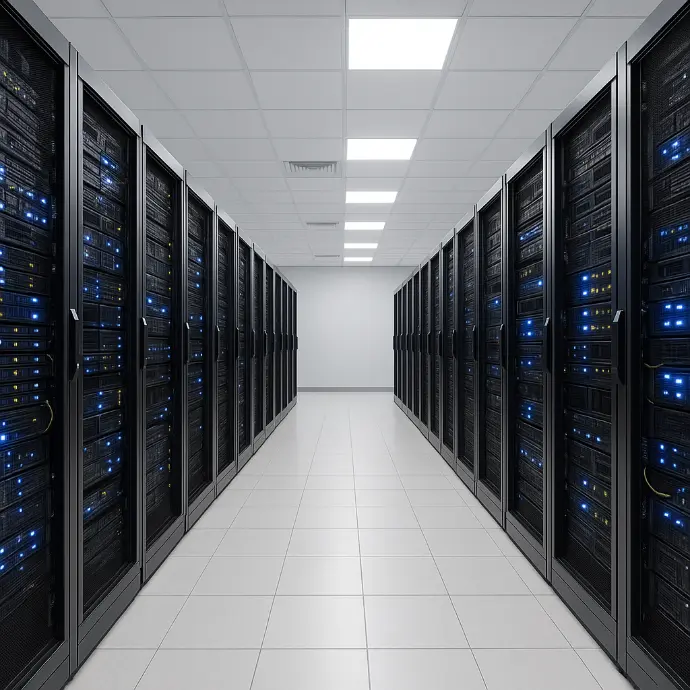
Our Servers: Fast, Reliable, and Fully Canadian
Our core platform runs on Toronto-based VPS servers, delivering speed, uptime, and full administrative control.
By keeping everything close to Ontario clinics, ClearQueue ensures low latency, predictable performance, and consistent reliability across Canada.
Each system is monitored, patched, and backed up on a regular schedule. We use hardened Ubuntu LTS environments, encrypted storage, and strict access controls to maintain security. There are no hidden third-party clouds, only well-managed Canadian infrastructure purpose-built for privacy and stability.
In practice:
- Location: Toronto data center (VPS)
- Performance: Low latency for Ontario and nationwide coverage
- Security: Hardened systems, encrypted storage, monitored access
- Reliability: Redundant services with daily encrypted backups
The result:
Consistent performance, strong privacy guarantees, and total control — all hosted in Canada.
Operational Safeguards
ClearQueue is built for privacy, reliability, and accountability at every level. Each safeguard, from data isolation to encryption and audit logging, is designed to meet and exceed PHIPA and PIPEDA standards.
Our systems are continuously verified, monitored, and hardened to keep your clinic’s information protected and auditable.
Environment Separation
ClearQueue maintains completely independent production and test environments.
The production environment is the only location where real clinic data is processed.
It operates under full PHIPA and PIPEDA controls with strict retention, access, and encryption policies.
The test environment uses only synthetic or anonymized data for validation, performance testing, and feature improvements.
There are no shared databases, credentials, or storage paths between these environments. This ensures that updates and testing never touch real patient information.
Access Control
Access to ClearQueue systems follows a least-privilege model so that users can only access what they need to perform their specific role.
All administrative accounts require multifactor authentication and use encrypted connections.
Each account is scoped by role and purpose, and permissions are reviewed regularly.
Every login, data download, and configuration change is recorded and timestamped in a secure log.
Access logs are reviewed routinely to confirm that no unauthorized activity has taken place.
Audit Logging
Every key action within ClearQueue, such as data access, file modification, download, access or deletion, is recorded in an append-only audit log.
Logs cannot be edited or removed, which ensures a verifiable chain of custody for all PHI-related activities.
During internal compliance reviews, audit logs are checked for completeness and anomalies.
Clinics may also request exported audit logs for their own privacy or compliance reviews.
This creates full transparency about how each call, transcript, and document is handled.
Encryption and Storage Security
All stored and transmitted data is protected with AES-256 encryption at rest and TLS 1.2 or higher in transit.
Encryption is enforced on every system, including databases, storage volumes, backups, and inter-service connections.
Data is stored only in Canadian data centres that meet industry standards for reliability and durability.
Encryption keys are managed in a restricted secrets vault that can only be accessed by authorized system processes.
This structure ensures complete Canadian data residency and protection against unauthorized access.
Monitoring and Patching
ClearQueue systems are continuously monitored for uptime, performance, and security events.
All alerts, metrics, and logs are collected for review by automated systems and human operators.
We follow a controlled patching schedule to apply updates during planned maintenance windows.
Critical security updates are prioritized and applied immediately after validation.
This ongoing monitoring and patching process ensures stability, performance, and consistent security.
Backup & Recovery
Clinic data is backed up daily using encrypted, versioned snapshots that are stored in a separate Canadian region.
Backups are verified for integrity, and retention policies follow compliance standards.
In the event of hardware or service failure, data can be quickly restored from verified backup nodes, without leaving Canada.
Disaster recovery plans are tested regularly to confirm readiness and recovery time objectives.
This approach ensures that your data remains secure, available, and recoverable under any circumstance.
Beginner
$ 129
/ month- $99/month for an annual subscription
- 500 call minutes included
- additional minutes are $0.19/min
- Always free support
Professional
$ 249
/ month- $199/month for an annual subscription
- 1,000 call minutes included
- additional minutes are $0.15/min
- Always free support
Expert
call
- Get access to all modules and features
- Unlimited customization
- 24x7 toll-free support
Our Frequently Asked Questions
All core systems run on virtual private servers located in Toronto data centers.
Every component — including storage, processing, and backups — remains entirely within Canada to ensure compliance with PHIPA and PIPEDA. This setup provides excellent performance for Ontario and Eastern Canada.
As we onboard clinics in Western Canada, we continuously monitor latency. We may deploy additional regional GPU nodes or edge servers to maintain the same level of responsiveness and reliability across the country.
No. All transcription and summarization are performed on our GPU nodes, managed in North Bay or/and by Canadian data centre partners, who run our own secure software image. We do not use any U.S.-based or public AI platforms such as OpenAI, AWS, or Google Cloud for processing.
All data processing and storage occur entirely within Canada, in compliance with PHIPA and PIPEDA requirements.
Access to recordings and transcripts is strictly limited to authorized personnel within ClearQueue. At this time, all production access is managed directly by Alexander Knecht, the system architect and compliance officer.
Access is logged, monitored, and reviewed, and background checks are available upon request for any staff with system privileges.
Every piece of information that flows through ClearQueue is protected by end-to-end encryption and strict access controls.
Data in transit is secured using TLS 1.2 or higher, and stored data is encrypted with AES-256, the same standard used by major financial institutions.
Our servers run hardened Ubuntu LTS builds configured for least-privilege access, regular patching, and continuous monitoring.
ClearQueue performs automated, encrypted backups daily, stored in separate Canadian regions to protect against data center failure.
Backups are versioned, verified for integrity, and encrypted before leaving the production environment.
This design enables rapid restoration while maintaining all copies within Canada at all times.
Backups follow strict retention and deletion schedules, ensuring that old data is removed safely once it is no longer required.
The ClearQueue platform is built with redundancy at every layer.
If local GPU Nodes become unavailable, our rented GPU servers from our Toronto Datacenter will take over to maintain uptime and performance.
Load balancers distribute traffic evenly, and critical services are monitored around the clock.
In the rare event of a wider outage, encrypted backups and recovery scripts ensure that the system can be restored quickly and predictably, with minimal or no data loss and downtime for clinics.
Recordings and raw transcripts are kept for 30 days by default.
After that, they are automatically deleted according to retention policy, ensuring no unnecessary storage of PHI.
The processed summaries — known as EchoNote PDFs — are retained for 90 days, following standard medical record requirements in Ontario.
All retention actions are logged and visible through our audit trail for full transparency.
Yes. Clinics have full control over the lifecycle of their information.
If you wish to delete data earlier than the default retention schedule, a verified portal administrator can request removal at any time or shortening the retaining time period. Each deletion is recorded in the audit log.
Updates are rolled out during scheduled maintenance windows to avoid disruption.
Each new version of ClearQueue is first deployed to an isolated test environment that uses only synthetic data.
Once verified for stability, performance, and security, the release is pushed to production.
Critical security patches are applied immediately upon validation, while functional updates follow a controlled release cycle.
This disciplined process allows us to innovate quickly without compromising reliability or privacy.
Absolutely. ClearQueue maintains two completely isolated environments.
The production environment handles live clinic data in full compliance with PHIPA and PIPEDA, utilizing strict encryption, access control, and logging.
The test environment contains only synthetic or anonymized data, used for development, validation, and performance testing.
No shared databases, storage, or credentials exist between them. This separation ensures that innovation never risks patient privacy.